
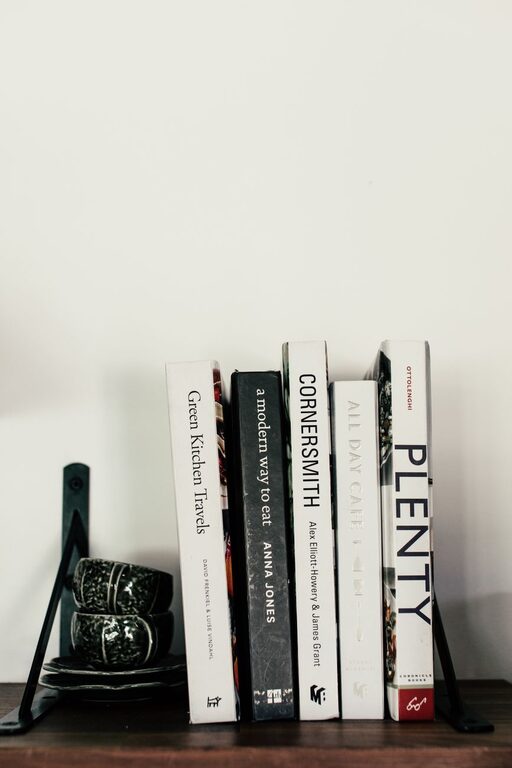
Vintage cookbooks bring color, character, and a sense of history to the kitchen. Their illustrated covers, worn spines, and handwritten notes can make a space feel warm and personal. Instead of hiding them in a cabinet, use them as part of your kitchen decor while keeping your favorite recipes easy to find.
Whether you own a small collection or a growing library, there are many creative ways to display vintage cookbooks. The key is to balance beauty with practicality, protecting the books from moisture, heat, and heavy daily use.
Create a Colorful Cookbook Shelf
One of the simplest display ideas is to dedicate a shelf to your cookbook collection. Arrange the books by color to create a cheerful, coordinated look. Group red, blue, green, or yellow covers together, or create a soft progression from light to dark shades.
For a more relaxed arrangement, mix the books by size and color. Place taller books next to shorter ones, then add a few decorative objects between groups. Small pottery pieces, wooden utensils, or a vintage timer can help connect the collection to the rest of the kitchen.
Keep the shelf away from the stove and sink whenever possible. Steam, splashes, and cooking grease can damage old paper and bindings over time.
Use a Cookbook Stand as a Focal Point
A cookbook stand turns a single book into a decorative feature. Choose a vintage wooden stand for a traditional look, a metal stand for a farmhouse feel, or a simple modern stand to let the cookbook take center stage.
Display a book with an especially attractive cover or illustration. You can change the featured cookbook each month or rotate it with the seasons. A book about baking may be a natural choice during the holidays, while a garden-inspired cookbook can add color in spring and summer.
For daily cooking, select a sturdy book that can handle regular use. For delicate or collectible editions, display the cover without leaving the book open for long periods.
Style Open Shelving
Open shelves are ideal for showing off vintage cookbooks because they combine storage and decoration. Stack two or three books horizontally, then place a small bowl, framed print, or plant on top. Beside the stack, stand a few books vertically with their spines facing out.
Try these open-shelf arrangements:
– Group books in sets of three to five.
– Alternate vertical rows with horizontal stacks.
– Leave a little space around each group to avoid a crowded appearance.
– Mix books with everyday kitchen items for a useful, lived-in look.
– Keep heavier books on lower shelves for stability.
If your kitchen has several open shelves, repeat one or two colors throughout the display. This creates a sense of order without making every shelf look identical.
Display Books on a Plate Rack
A plate rack can be used for more than dishes. Its individual slots are also useful for holding cookbooks upright. This works especially well with books that have colorful covers or illustrated fronts.
Place the rack on a counter, sideboard, or wide shelf. Arrange several books side by side, making sure they fit securely. You can add a small cutting board or decorative plate behind the books to create more visual height.
Choose books with durable covers for this type of display. Older paperbacks may bend if they are squeezed tightly into narrow slots.
Add a Picture Ledge
Picture ledges offer a neat way to display cookbook covers without taking up much counter space. Install one or two ledges on an open wall, then lean the books against the wall rather than hanging them flat.
This approach allows you to see the front covers, which is useful when the books have beautiful illustrations or typography. Layer smaller books in front of larger ones, but avoid stacking too many together so every cover remains visible.
A picture ledge can also become a rotating display. Change the books according to the season, a special meal, or a current baking project. Use removable wall hardware if you are renting or want the flexibility to move the display later.
Build a Small Kitchen Reading Corner
If your kitchen has an unused corner, create a compact reading area for cookbooks. A narrow bookcase, small stool, or wall-mounted shelf can turn an empty spot into a charming feature.
Place the books at a comfortable height and include a small lamp if the area is dim. A nearby chair or bench makes the space useful for planning meals, reviewing recipes, or enjoying a cup of coffee.
To keep the corner from feeling cluttered, limit the display to books you use or genuinely enjoy. Store the rest in a nearby cabinet or another room.
Use a Rolling Cart for Flexible Storage
A rolling cart gives you a movable home for vintage cookbooks. Store books on one or two shelves, then use the remaining space for mixing bowls, tea towels, or cooking tools.
The cart can move closer to the work area when you are preparing a meal and return to a less busy part of the kitchen afterward. It is also a good option for renters because it does not require wall installation.
Add a small basket to collect loose recipe cards and notes. Keep the cart away from direct heat and avoid placing it where it could block a walkway.
Make a Wall Display With Book Covers
If you have duplicate copies of a cookbook or damaged books that are no longer suitable for regular use, consider displaying selected covers as wall art. Frame the covers, place them in shallow shadow boxes, or use clip frames that make it easy to change the artwork.
A group of three covers often creates a balanced arrangement. You can line them up horizontally, arrange them in a grid, or place them above a breakfast nook. Choose frames that complement the kitchen, such as natural wood, black metal, or simple white.
This method lets you enjoy the artwork without exposing the entire collection to daily handling.
Organize Cookbooks by Use
A beautiful display is easier to maintain when the collection is organized. Sort your books in a way that suits your cooking habits. Possible categories include:
– Baking and desserts
– Regional or international cooking
– Quick weekday meals
– Preserving and canning
– Vegetarian recipes
– Drinks and entertaining
– Family or heirloom books
Keep frequently used books within easy reach and place more delicate or rarely used editions in a protected location. You can arrange each category by size, color, or author to make finding a title simple.
Protect Your Vintage Collection
Vintage cookbooks need a little extra care. Keep them away from direct sunlight, which can fade covers and weaken paper. Avoid storing them directly beside the sink, dishwasher, or stove, where moisture and heat are common.
Use clean, dry hands when handling fragile pages, and consider placing a washable tray beneath books displayed on the counter. Do not use adhesive labels on old covers or pages. For particularly valuable editions, display a reproduction or photocopied recipe while storing the original safely.
Make the Display Feel Personal
The best cookbook displays reflect the people who use the kitchen. Include a handwritten recipe card, a family serving spoon, or a small framed note beside the books. These details make the arrangement feel collected rather than overly styled.
You do not need a large collection or a spacious kitchen to create an appealing display. A single cookbook on a stand, a short stack beside a cutting board, or a small shelf near the dining area can add warmth and personality.
By combining thoughtful placement, practical organization, and a few meaningful accessories, vintage cookbooks can become both useful resources and memorable kitchen decor.